
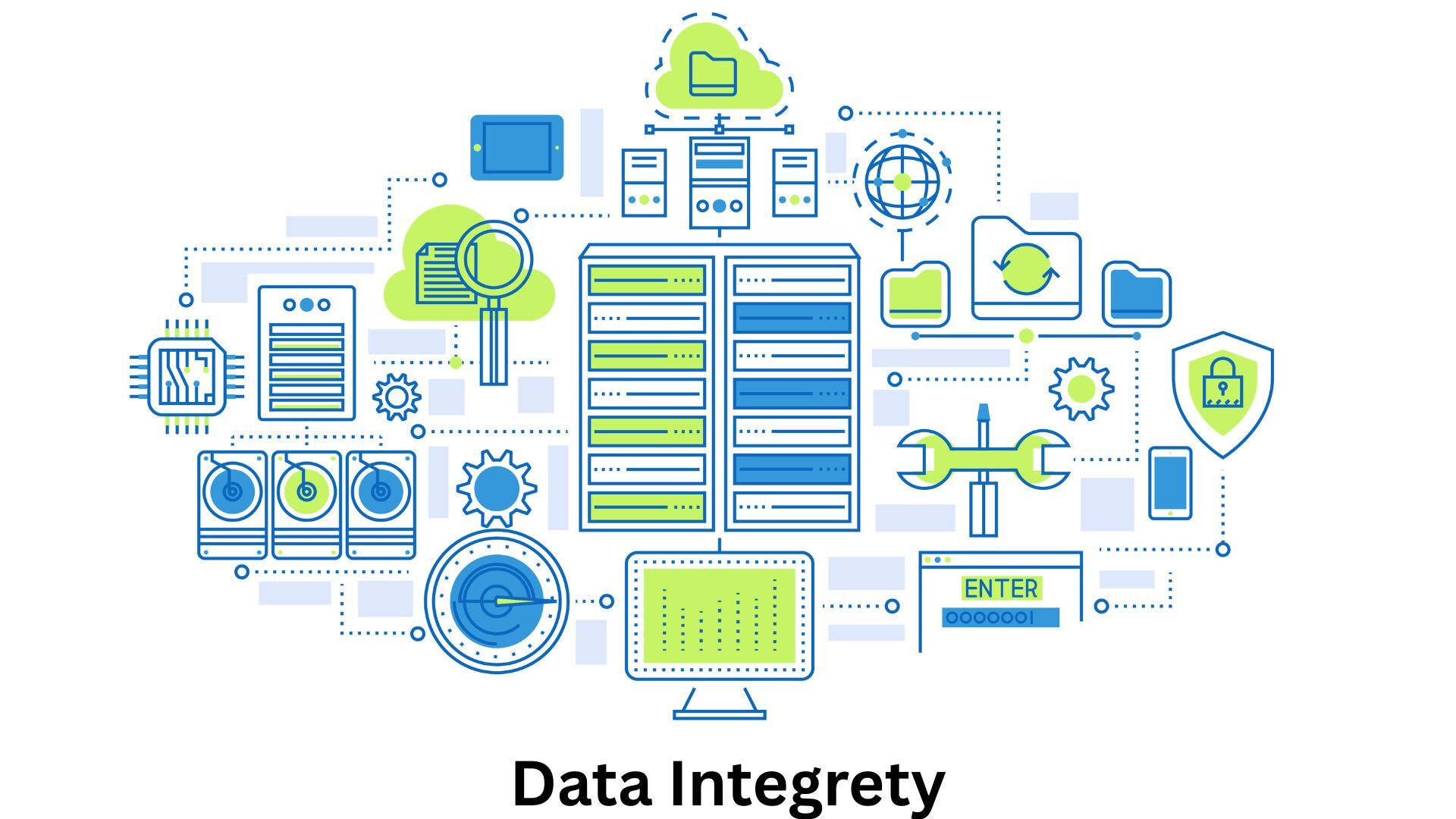
Data integrity is crucial in today’s digital landscape, directly impacting business operations, customer trust, and regulatory compliance. According to recent studies, organizations lose an average of $15 million annually due to poor data quality, while data integrity failures contribute to 88% of cybersecurity incidents. This article explores the concept of data integrity, its business importance, and the types of integrity in both physical and logical contexts. Furthermore, it discusses cybersecurity threats, the relationship between data integrity and data security, as well as the relevance of data integrity to regulations like GDPR. Lastly, the article highlights common risks to data integrity and provides measures to protect and maintain data integrity effectively.
What is Data Integrity?
Data integrity refers to the overall accuracy, completeness, and consistency of data. It encompasses maintaining data safety in terms of regulatory compliance and security throughout its lifecycle. By implementing processes, rules, and standards during the design phase, data integrity ensures that information stored in databases remains reliable, accurate, and complete over time.
The Significance of Maintaining Data Integrity
Data integrity is essential for safeguarding against data loss, leaks, and malicious intent. It acts as a protective measure to keep sensitive data secure from both external and internal threats. By implementing proper data validation and error-checking mechanisms, organizations can prevent miscategorization or incorrect storage of data, minimizing potential risks.
Types of Data Integrity
There are two main types of data integrity: physical integrity and logical integrity. Both of them are collections of processes and ways of enforcing data integrity in hierarchical as well as relational databases.
Physical Integrity
Physical integrity focuses on protecting the accuracy and wholeness of data as it is stored and retrieved. Factors such as natural disasters, power outages, hackers, human errors, and storage erosion can compromise physical integrity. It becomes challenging for data processing managers and auditors to obtain accurate data in such scenarios.
Logical Integrity
Logical integrity ensures data remains unchanged when used in different ways within a relational database. It safeguards against human errors and malicious activities. Logical integrity comprises four types:
Entity Integrity
Entity integrity relies on primary keys to prevent data duplication and null fields within tables. It ensures each record in a database can be uniquely identified and prevents duplicate entries that could compromise data accuracy.
Referential Integrity
Referential integrity enforces processes that maintain uniformity in data storage and usage, including constraints and rules for changes, additions, or deletions. It ensures relationships between tables remain consistent and valid.
Domain Integrity
Domain integrity ensures the accuracy of each piece of data within a defined domain, including constraints and measures to limit the format, type, and amount of data entered. This prevents invalid data from being entered into database fields.
User-defined Integrity
User-defined integrity involves rules and constraints specific to business needs that supplement entity, referential, and domain integrity measures. These custom rules ensure data meets specific organizational requirements.
Cybersecurity Threats to Data Integrity
Modern cybersecurity threats pose significant risks to data integrity. Ransomware attacks can corrupt or encrypt data, making it inaccessible or unreliable. SQL injection attacks allow malicious actors to modify database contents without authorization. Man-in-the-middle attacks can intercept and alter data during transmission. Insider threats, whether malicious or accidental, remain a leading cause of data integrity breaches. Additionally, zero-day exploits and advanced persistent threats (APTs) can compromise data integrity through sophisticated attack vectors that traditional security measures may not detect.
Data Integrity and GDPR Compliance
Data integrity plays a vital role in complying with data protection regulations such as GDPR. Non-compliance can result in significant penalties, lawsuits, and reputational damage. Maintaining data integrity is crucial for avoiding these consequences. Organizations must adhere to necessary measures in order to meet the essential data integrity requirements.
Risks to Data Integrity
Data integrity can be compromised by various factors, including:
- Human Error: Incorrect data entry, duplication, protocol non-compliance, or mistakes during safeguard implementation.
- Transfer Errors: Data can be compromised during transmission or migration between systems or platforms due to network issues, data corruption, or incomplete transfers.
- Malicious Activities: Intentional actions by individuals or external threats, such as hacking, unauthorized access, data tampering, or injection of malware or viruses.
- System Failures: Hardware or software failures, power outages, or database crashes can result in data loss or corruption if proper backup and recovery mechanisms are not in place.
- External Factors: Natural disasters, environmental conditions, or physical damage to storage devices can lead to data loss or corruption.
Data integrity measures
To protect data integrity, organizations can implement the following measures:
- Data Validation and Quality Checks: Implement thorough validation processes to ensure the accuracy, consistency, and completeness of data at the point of entry.
- Access Control and User Permissions: Limit data access to authorized individuals and assign appropriate user permissions to prevent unauthorized modifications or deletions.
- Data Backup and Recovery: Regularly back up data and establish robust recovery mechanisms to restore data in case of system failures or data loss.
- Encryption and Data Security: Implement encryption methods and secure data storage practices to protect data from unauthorized access and tampering.
- Auditing and Monitoring: Conduct regular audits and implement monitoring systems to detect and respond to any data integrity breaches or suspicious activities.
- Employee Training and Awareness: Train employees on data integrity best practices, security protocols, and the importance of data accuracy to minimize human errors.
Frequently Asked Questions About Data Integrity
What is the difference between data integrity and data security?
Data integrity focuses on maintaining the accuracy, consistency, and reliability of data throughout its lifecycle, while data security concerns protecting data from unauthorized access and breaches. Security is about who can access data, whereas integrity is about ensuring the data remains accurate and unchanged.
How does data integrity relate to GDPR compliance?
GDPR requires organizations to ensure the accuracy and integrity of personal data. Article 5(1)(d) of GDPR specifically mandates data accuracy, making data integrity essential for compliance. Failure to maintain data integrity can result in GDPR violations and penalties up to €20 million or 4% of global annual turnover.
What are the most common causes of data integrity failures?
The most common causes include human error during data entry, software bugs, hardware failures, malicious cyberattacks, improper data migration, inadequate backup procedures, and lack of proper validation mechanisms. Studies show that human error accounts for approximately 40% of all data integrity issues.
How can organizations measure data integrity?
Organizations can measure data integrity through key metrics including error rates, data completeness percentages, accuracy scores, consistency checks across systems, audit trail completeness, and validation pass rates. Regular data quality assessments and automated monitoring tools help track these metrics continuously.
What role does encryption play in data integrity?
While encryption primarily protects data security, it also supports integrity through cryptographic hashing and digital signatures. These mechanisms can detect if data has been altered or tampered with during storage or transmission, providing an additional layer of integrity verification.
How often should data integrity checks be performed?
Data integrity checks should be performed continuously through automated validation systems for real-time data entry, with comprehensive audits conducted quarterly or semi-annually depending on industry requirements. Critical systems may require daily or weekly integrity verification, especially in healthcare, finance, and sectors handling sensitive personal information.
Can cloud storage affect data integrity?
Cloud storage can both enhance and challenge data integrity. Modern cloud providers implement robust integrity measures including redundancy, automatic backups, and error detection. However, organizations must ensure proper configuration, access controls, and understand shared responsibility models to maintain integrity in cloud environments.
Conclusion
Data integrity is crucial for ensuring the accuracy, completeness, and consistency of data throughout its lifecycle. Organizations can mitigate risks by implementing measures to protect data integrity, comply with regulations, and maintain trust in their data. Prioritizing data integrity safeguards against data loss, unauthorized access, and malicious activities, ultimately contributing to the overall security and reliability of an organization’s data assets.