
OLAP vs OLTP: The Differences in Data Analysis and Processing
Understand the key differences between OLAP and OLTP in data processing. Compare analytical vs transactional systems, use cases, features, and performance.
March 12, 2026
4 min read
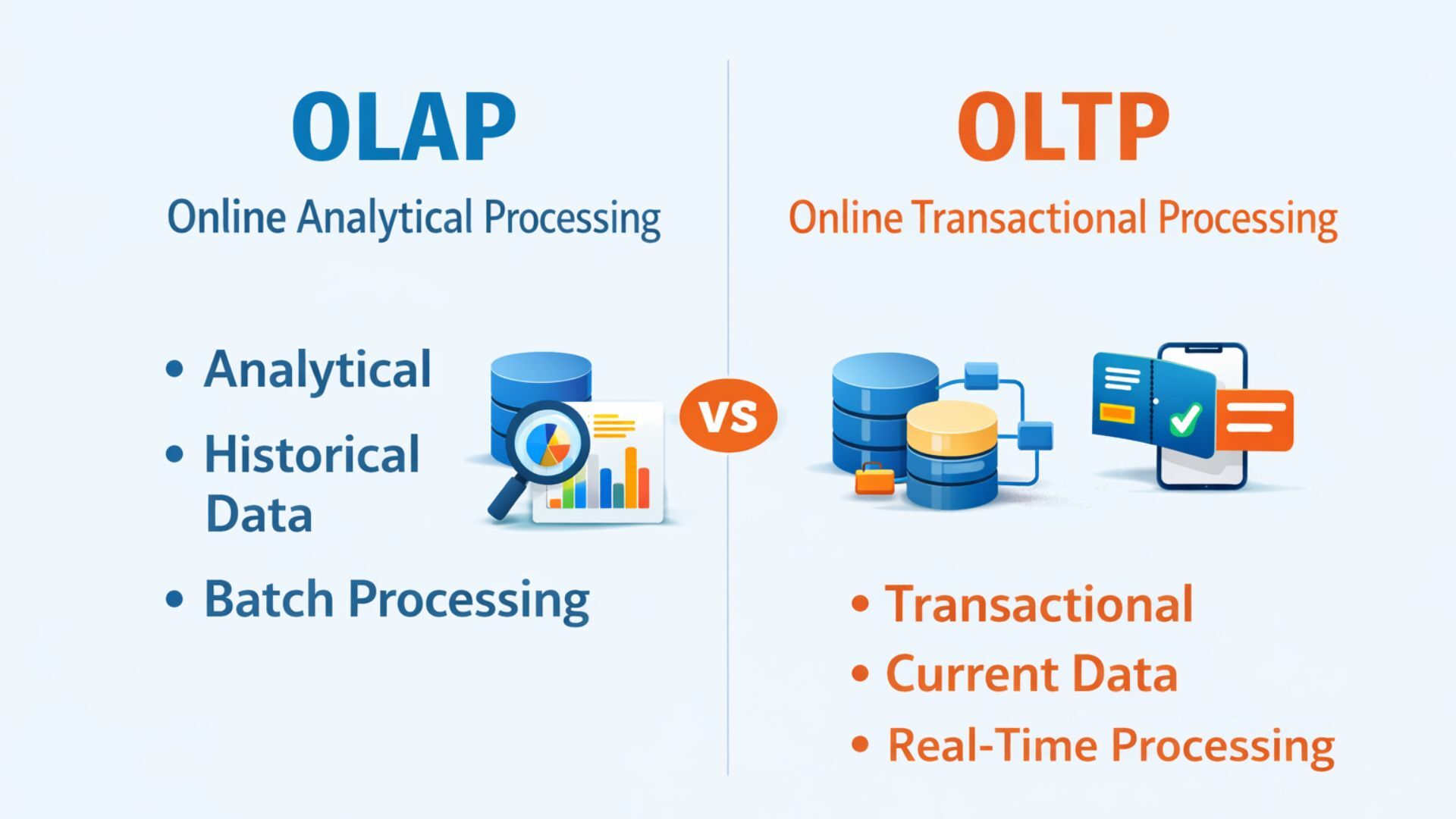
OLAP and OLTP are two different types of database management systems that serve different purposes. While OLTP is designed for transaction processing and real-time data management, OLAP is designed for data analysis and reporting. In this article, we will compare and contrast these two systems.
OLTP:
OLTP stands for Online Transaction Processing. It is a type of database management system that is optimized for processing and managing high volumes of transactions in real-time. OLTP systems are designed for fast data entry, update, and retrieval. They are used in various industries such as banks, airlines, retail stores, and other businesses that require immediate access to transactional data.
In OLTP systems, data is structured in a normalized form that minimizes redundancy and allows for efficient data retrieval and storage. The main focus of OLTP systems is to ensure the accuracy, consistency, and reliability of transactional data. Examples of OLTP systems include point-of-sale systems, airline reservation systems, and e-commerce websites.
OLAP:
OLAP stands for Online Analytical Processing. It is a type of database management system that is optimized for data analysis and reporting. OLAP systems are designed to handle complex queries involving aggregation, grouping, and filtering of data. They are commonly used in industries such as business intelligence, data mining, and financial analysis.
In OLAP systems, data is structured in a denormalized form that allows for efficient data retrieval and aggregation. The main focus of OLAP systems is to provide fast and accurate analysis of large sets of data. Examples of OLAP systems include business intelligence tools, financial reporting applications, and data mining platforms.
[](/blog/guide-for-ua-to-ga4-migration)
Related : UA to GA4 Migration: Ultimate Guide
Differences between OLAP and OLTP:
Purpose: The main purpose of OLTP is to manage transactional data in real-time, while the main purpose of OLAP is to analyze and report on large sets of data.
Data Model: OLTP systems use a normalized data model to ensure data accuracy and consistency, while OLAP systems use a denormalized data model to optimize data retrieval and aggregation.
Data Structure: OLTP systems use a row-based storage structure to optimize data entry and retrieval, while OLAP systems use a column-based storage structure to optimize data analysis and reporting.
Query Types: OLTP systems are optimized for simple queries that involve transactional data retrieval, insertion, and modification, while OLAP systems are optimized for complex queries that involve data aggregation, grouping, and filtering.
Conclusion:
In conclusion, OLTP and OLAP are two different types of database management systems that serve different purposes. OLTP is designed for transaction processing and real-time data management, while OLAP is designed for data analysis and reporting. The choice between OLTP and OLAP depends on the specific needs of an organization.