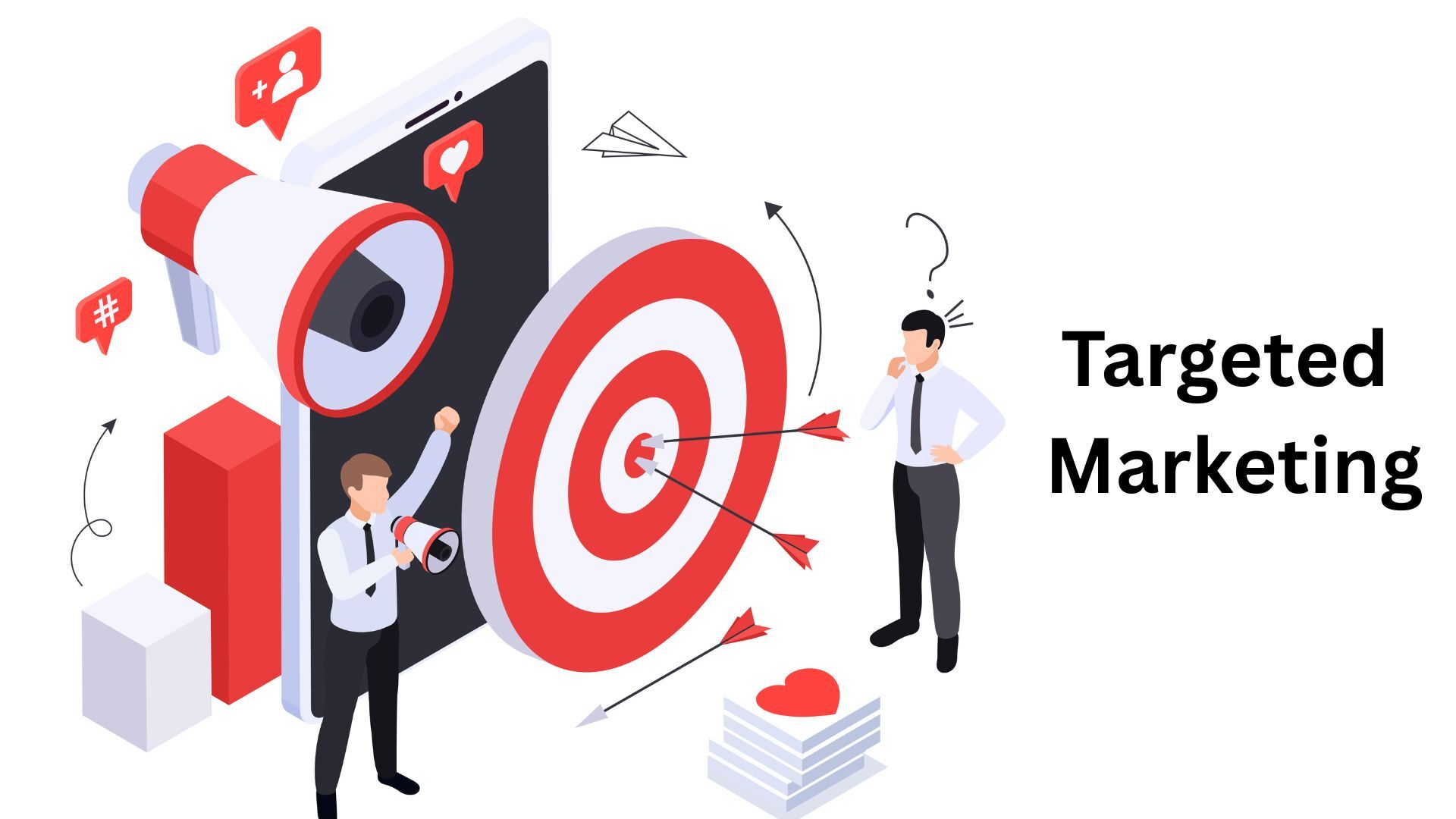
Targeted marketing is an approach to raise awareness for a product or service among a specific or targeted group of audiences. Let’s understand all about targeted marketing, its strategies and its different types.
Define Targeted Marketing
Targeted marketing is essentially the strategy of tailoring and personalising online advertising as per the data acquired from a set of intended audiences. The targeted audiences that are a part of the total market can be specific consumers, professionals, households, or businesses, depending on who the market is trying to reach.
By focusing on a particular group of audience you can significantly grow your business, generate revenue, and even improve your overall ROI.
What is Audience Targeting in Marketing?
Targeted marketing is a tactic that contrasts with the broader approaches of advertising which aims at raising awareness, such as billboard advertising. This form of marketing starts with defining a “who” rather than a “what.”
This means a group of people are identified who are a good fit for the product or service and personalised messages are delivered directly to them instead of expecting audiences to react to the promotional messages.
In simple terms, instead of sending out ads to a large number of audiences, a subset is selected based on their traits, interests, and preferences. Also known as differentiated targeting strategy, it prioritises high advertising relevance by defining a target audience, segmenting that audience and creating customising ad sets for the segmented group.
What are the Benefits of Targeted Advertising?
The major benefits of targeted advertising are:
- Improved performance across the mobile app marketing funnel
- Increased ad engagement rates
- Higher user retention rates
- Lower churn rates
- Greater average revenue per user (ARPU)
With personalised ads, the likelihood of engaging the right type of user significantly increases. This improved engagement rate also impacts the in-app purchase rate, creating an overall positive experience for the user.
What are the Different Targeting Strategies in Marketing?
The different types of advertising targeting methods for mobile marketing are as follows:
- Multisegment targeting strategy
As per this commonly used audience targeting strategy, an app tweaks its ad campaigns to cater to various segments across its target audience.
- Concentrated targeting strategy
Also known as niche targeting, in this strategy, an app focuses most of its ad efforts on one particular segment of its target audience.
- Micromarketing strategy
Micromarketing or micro-targeting is an extreme form of targeting strategy. Here, an app customises its ads or messaging by the individual user with hyper-personalisation.
Which Targeting Option is Best for Achieving Brand Awareness?
When it comes to creating brand awareness, using an undifferentiated marketing strategy is beneficial for generating full market awareness. However, a multi-segmented marketing strategy can be identified to be the ideal choice. This is because this strategy can help you achieve brand awareness within the target market, providing a better run on ad spend (ROAS).
Which Targeting Option is Best for Influencing Consideration?
For influencing consideration, a concentrated marketing strategy is the best choice. This micromarketing ad targeting strategy can help in influencing the decision of a user with its hyper-personalisation.
What are the Different Types of Targeting in Marketing?
In the digital world, marketers have the opportunity to use multiple types of targeting to reach potential customers more effectively. Let’s dive deeper into understanding the advantages and disadvantages of each type and how you can use a combination of approaches to reach the right audience.
- Demographic Targeting
In demographic targeting, audience segmentation is done based on specific demographic characteristics such as age, gender, income, occupation or marital status.
For instance, an app selling video games may target an audience within the age group of 18-34 years.
- Contextual Targeting
In contextual targeting advertising, users are shown ads based on the content they are currently consuming. This can be based on the content of a webpage they are visiting, a show they are watching, or a song they are listening to, among other examples.
Therefore, the goal of this method is to match the ad content with respect to the user’s interest and needs in real time, making the advertising more relevant and useful.
For instance, if a user is reading about the foundation in beauty products, contextual targeting may show them an ad for an app that offers beauty products. This form of targeting algorithm analyses keywords, themes and topics of the content to provide the desired result.
- Behavioural Targeting
This targeting method collects consented data on a user’s browsing history, app usage, search queries, or in-app purchases, among other digital activities. These are then used to create a profile of their interests and preferences. The data is then used to display targeted ads to the user according to their past behaviour.
For example, if a user frequently searches for finance news-related websites, behavioural targeting may show them an app for tracking their finances or investing apps. A solid user opt-in strategy is essential when it comes to this targeting strategy.
- Geo-Targeting
Also known as the location-based mobile targeting method, this uses a user’s location data to create more personalised ad content. This data can be a broad location such as the city or state or based on geofencing.
With geofencing, a virtual boundary around a specific geographical area is created. Once a user enters the designated area, they can receive targeted ad content, such as in-app ads or push notifications, based on their location and behaviour.
For example, a restaurant chain may use geo-targeting to send targeted ads to users who are near their locations, offering them special in-app deals.
Conclusion
Thus, targeted marketing plays a crucial role in any mobile marketing campaign. Grow your business by creating targeted campaigns and interacting with prospecting customers via different communication channels. This helps in identifying and analysing different segments of the existing user base of an app. It results in successful targeting as you can focus on the kinds of users that you need to pursue to increase conversions and boost your sales.